



For years, the promise of artificial intelligence in hospitals has run into the same wall: the most useful patient data lives locked inside electronic health record systems that were never built to talk to outside tools. On September 1, 2026, OpenAI solved that problem for all of us. ChatGPT Epic EHR Integration is the headline healthcare story this week, and for good reason.
The company announced that ChatGPT for Healthcare can now connect to Epic, the dominant EHR platform in the United States. This gives authorized clinicians a way to pull together scattered patient information. They can now ask questions and get responses that they can easily comprehend, all without leaving their existing workflow.
The announcement: Healthcare organizations can now connect EHR and additional industry data to ChatGPT
According to OpenAI’s own announcement on its website, the move pairs two things at once: a new Epic integration that brings authorized patient context into ChatGPT, and a companion Healthcare Public Data plugin that connects the assistant to nine official public health datasets, including PubMed, ClinicalTrials.gov, RxNorm, DailyMed, and CMS Coverage. Together, OpenAI frames these as an attempt to gather patient records, medical evidence, and public health data into what it calls a single governed workspace.
A Perspective on Where This Is Heading
Before the details, here is the bigger picture. The ChatGPT Epic EHR Integration is not really about chat. It is about giving an AI model narrow, permissioned access to an organization’s own trusted data. That access comes with strict guardrails. Every claim traces back to the original chart entry. This pattern, not the chatbot interface, is what makes the integration significant.
EHR platforms like Epic have spent two decades becoming the system of record for hospitals. They were built to capture and store data, not to reason across it in natural language. The ChatGPT Epic EHR Integration is a plausible template for how large language models find their footing in regulated industries generally. Read-only access. Full audit trails. Human oversight. That is the formula.
If the safety numbers hold up under wider real-world use, this integration could become a case study in trust building. Not through promises of diagnostic power, but through quiet, unglamorous time savings. Reading records. Summarizing charts. Cross-referencing data that already exists. For healthcare technology vendors, including EHR-adjacent platforms and patient engagement solutions, the message is direct. AI-assisted chart review is becoming table stakes, not a differentiator.
Whether ChatGPT becomes the assistant clinicians reach for is still an open question. Epic’s own tools, Microsoft’s ambient AI products, and rivals like Anthropic’s Claude are all competing for that same moment. But the direction is clear. Patient records and AI assistants are being wired together. Carefully. Under supervision. The read-only, citation-backed approach behind the ChatGPT Epic EHR Integration looks like the opening move in a much longer contest.

What Clinicians Can Actually Do With It
The core idea is simple. A doctor preparing for morning appointments often clicks through several tabs inside Epic. They reconstruct a patient’s recent history by hand. What did the labs show? Did a specialist change a prescription? What follow-up items are still open? The ChatGPT Epic EHR Integration is built to answer these questions directly:
- What has changed since this patient’s last visit
- Which recent lab results should be reviewed before today’s appointment
- Whether there have been medication changes or new specialist recommendations
- What follow-ups, referrals, or unresolved issues remain open
ChatGPT gathers relevant material from the authorized record. It summarizes what matters. It links back to the original chart entries so the clinician can verify the source. OpenAI describes two deployment paths. In the first, a clinician brings authorized patient information from Epic into ChatGPT to prepare for a visit. In the second, available only in supported deployments, ChatGPT sits embedded inside the EHR layout itself. The clinician never leaves the patient chart. This mirrors a broader shift already underway in care management software powered by EHR, RPM, AI, and CCM integration, where connected data is becoming the backbone of better patient outcomes.

Multiple outlets that covered the launch, including TechCrunch and Becker’s Hospital Review, note a detail that is likely to matter a great deal to hospital compliance officers: the integration is read-only. ChatGPT can retrieve and summarize information from Epic, but it cannot write anything back into the record, place orders, or alter clinical documentation. TechCrunch’s coverage was explicit that OpenAI positioned this as a deliberate constraint rather than a technical limitation waiting to be lifted.
A Health System Vouching for It, By Name
OpenAI did not launch this quietly. UCSF Health is named as the featured pilot partner, and its president and CEO, Suresh Gunasekaran, is quoted directly in OpenAI’s announcement. He said the health system is exploring how the new EHR integration can help clinical teams understand what has changed and what matters most across a complex patient record, and that the technology has the potential to reduce time spent synthesizing data so clinicians get more time with patients. He added that UCSF is also engaging frontline teams to validate the capabilities in practice and help identify where they add the most value.
A second executive voice appears in the same announcement. Robert Purinton, Chief AI Officer at AdventHealth, is quoted saying that at AdventHealth the value of AI starts with its people, and that putting tools such as ChatGPT Work, Codex, and connected business data in the hands of team members can reduce routine work and move practical innovations into action faster. His stated goal was to free up more time for the human connection at the center of whole person care.
OpenAI’s own page also displays a list of what it calls healthcare launch partners for the broader ChatGPT for Healthcare push: AdventHealth, Baylor Scott and White Health, Boston Children’s Hospital, Cedars-Sinai, HCA Healthcare, Memorial Sloan Kettering Cancer Center, and UCSF. That is a notably large roster of well-known American health systems attaching their names to a single product announcement, and it signals that OpenAI is trying to establish credibility in hospital IT departments the same way Epic itself built its reputation over decades.

The Numbers OpenAI Is Leaning On
Numbers do a lot of persuading in this launch. OpenAI says it partners with hundreds of physicians across sixty countries, forty-nine languages, and twenty-six medical specialties. These physicians help define, measure, and improve how ChatGPT handles health-related responses. OpenAI states they have reviewed more than seven hundred thousand model responses drawn from real-world healthcare questions.
For the ChatGPT Epic EHR Integration specifically, OpenAI ran a targeted evaluation. Physicians assessed output across twenty-seven distinct clinical use cases. These included pre-visit review, clinical timeline construction, medication review, and handoff summaries. Across four thousand three hundred sixty-three individual ratings, OpenAI reports ninety nine point one percent of responses were judged safe.
A separate two-round evaluation tested ChatGPT against nuanced clinical questions built on large United States healthcare datasets. For each of five connected data sources, OpenAI says more than ninety-three percent of responses were rated good or better on accuracy. Becker’s Hospital Review, citing the same figures, noted scores ranging from ninety three point two percent for CMS Coverage data up to ninety eight point six percent for DailyMed.
Scale matters too. TechCrunch reports Epic’s systems hold records for more than three hundred twenty-five million patients. That is a massive share of the American population. It is part of why the ChatGPT Epic EHR Integration carries more real-world weight than a connection to a smaller EHR vendor. TechCrunch also notes OpenAI expanded ChatGPT for Health to all United States consumers in July 2026. The company says people now send it roughly three hundred million health-related queries every week.
Here is how the key figures line up at a glance:
| Metric | Reported Figure | Source |
|---|---|---|
| Overall safety rating across EHR use cases | 99.1 percent of responses rated safe | OpenAI, based on 4,363 physician ratings |
| Clinical use cases evaluated | 27 use cases, including pre-visit review and handoff summaries | OpenAI |
| Physician network supporting evaluations | Hundreds of physicians across 60 countries, 49 languages, and 26 specialties | OpenAI |
| Model responses reviewed to date | More than 700,000 | OpenAI |
| Accuracy on public data sources | 93 percent or higher rated good or better | OpenAI, cited by Becker’s Hospital Review |
| CMS coverage accuracy | 93.2 percent | Becker’s Hospital Review |
| DailyMed accuracy | 98.6 percent | Becker’s Hospital Review |
| Patient records within Epic’s network | More than 325 million | TechCrunch |
| Weekly health-related queries to ChatGPT | Roughly 300 million | TechCrunch |
How Access Is Actually Controlled
The ChatGPT Epic EHR Integration is not open by default. OpenAI frames it as an enterprise feature. It is not something an individual switches on inside a personal account. Workspace administrators decide which integrations get enabled. Existing user permissions determine what any clinician or staff member can see once it is live. OpenAI’s announcement states that ChatGPT for Healthcare includes role-based access controls, single sign-on, and audit logging. Organizations with an applicable Business Associate Agreement can also use ChatGPT Work, Codex, and other connected apps to support HIPAA-compliant workflows.
Access is tiered by account type. Current ChatGPT for Healthcare customers ask their workspace administrator to turn on the integration and the plugin. ChatGPT Enterprise customers contact their OpenAI account team to check eligibility for a regulated workspace configuration. Individual clinicians using the consumer-facing ChatGPT for Clinicians product in the United States can install the Healthcare Public Data plugin on their own. OpenAI is explicit that the ChatGPT Epic EHR Integration itself is not available to individual accounts. That single distinction signals how OpenAI wants this treated, as institutional infrastructure, not a personal productivity trick.
The Nine Sources Behind the Public Data Plugin
The ChatGPT Epic EHR Integration handles private, authorized patient data. OpenAI paired it with a separate plugin for public, structured healthcare information. The Healthcare Public Data plugin links ChatGPT to nine official sources. These include ClinicalTrials.gov, CMS Coverage, RxNorm, DailyMed, and PubMed, alongside four other authoritative datasets. OpenAI’s framing is simple. Teams can work with specific records, fields, identifiers, and versions from these sources, rather than searching each one separately by hand.
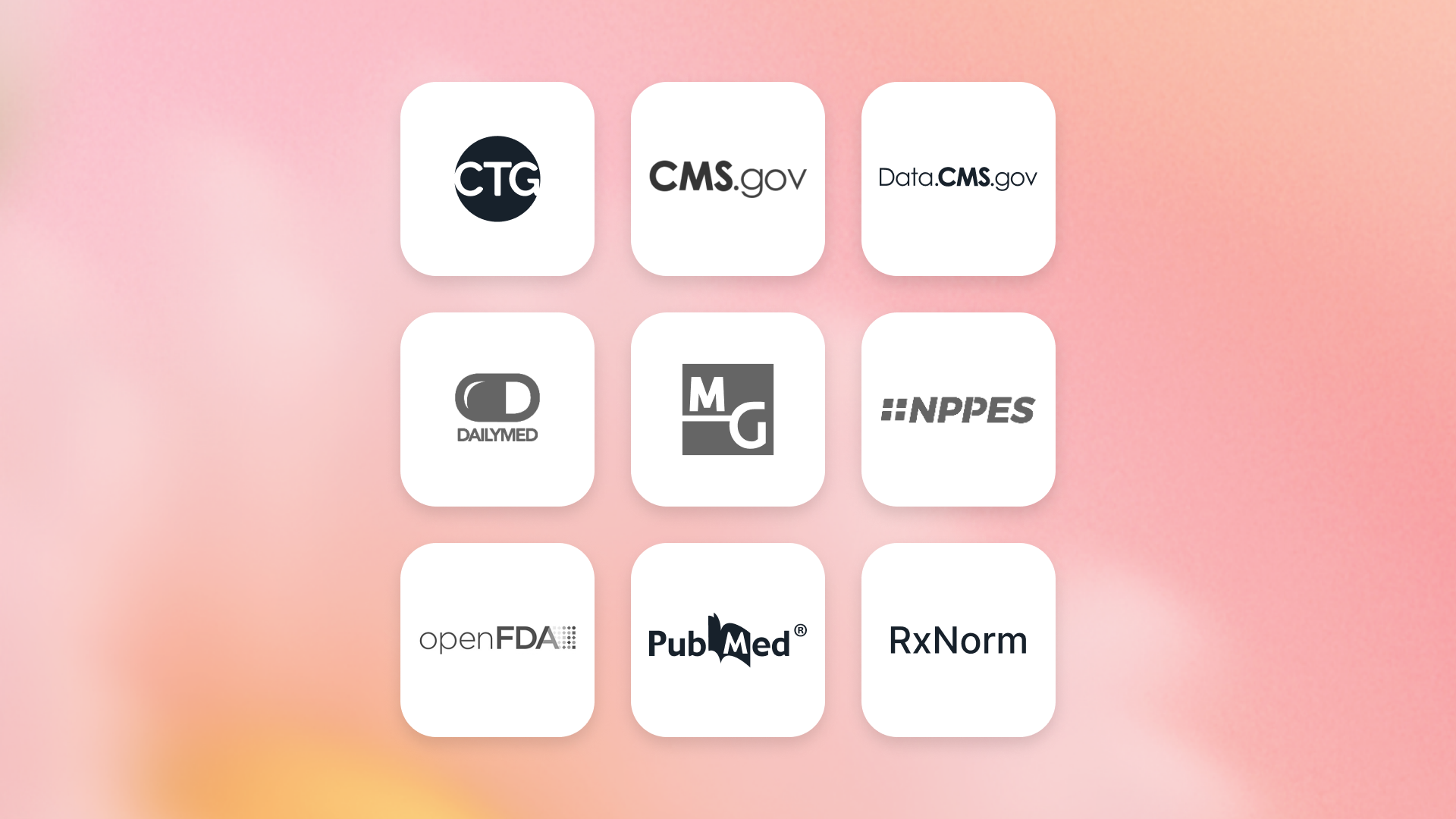
The examples OpenAI gives are grounded in day-to-day hospital operations rather than abstract research. A clinical research team could use ClinicalTrials.gov through the plugin to find actively recruiting trials and line up their eligibility criteria. A hospital pharmacy team could check DailyMed for the current label and safety warnings on a medication before dispensing it. A population health team building a diabetes prevention program could pull together relevant research, active trials, and Medicare coverage details in one source-backed view to help program leaders spot open questions before committing resources.
Why the Timing and Framing Matter
The launch is part of a larger shift in healthcare technology. Fierce Healthcare and PYMNTS highlighted this change. They positioned the Epic integration as OpenAI entering the clinical software space.
This space has traditionally been dominated by specialized healthcare vendors. Microsoft-owned Nuance and other ambient documentation platforms have also gained ground.
The Epic integration is significant for several reasons:
- Direct EHR access: Authorized clinicians can review patient information from Epic through ChatGPT. This includes clinical notes, medications, encounters, and laboratory results.
- Less manual data gathering: Clinicians can ask questions about patient history instead of manually reviewing multiple records.
- Workflow integration: In supported deployments, ChatGPT can work within the EHR workflow. This reduces the need to switch between applications.
- Read-only access: The current Epic integration retrieves and analyzes authorized information. It does not write information back to the patient record.
- Broader healthcare data access: OpenAI has also introduced a Healthcare Public Data plugin. It connects to sources such as PubMed, ClinicalTrials.gov, DailyMed, RxNorm, and CMS Coverage.
Epic is therefore an important entry point into clinical workflows. The integration allows OpenAI to work with information that healthcare teams already use every day. It also shows how AI is moving from standalone assistants toward integrated digital health solutions.
There is also a reputational backdrop worth noting. TechCrunch reported that weeks before this announcement, OpenAI faced a lawsuit from a Florida-based pastor. He alleged ChatGPT gave him a near-fatal recommendation. An earlier case involved family members blaming the chatbot for wrongful advice related to medication dosage. OpenAI has consistently maintained that ChatGPT is not suitable for diagnosis or treatment decisions. The read-only, human-reviewed design behind the ChatGPT Epic EHR Integration looks like a direct response to that pressure. The company is betting that a supporting, summarizing role, with every claim traceable back to the source, is what separates a useful clinical tool from a liability.

Conclusion
The ChatGPT Epic EHR Integration is not a flashy consumer feature. That is the point. It is a carefully bounded, read-only, permission-gated tool. It solves a mundane but expensive problem: clinicians spending too much time hunting through fragmented records instead of caring for patients. OpenAI paired the integration with a Healthcare Public Data plugin, a public evaluation involving hundreds of physicians, and a visible roster of respected health systems. Together, these try to answer the two biggest objections that greet AI in medicine: is it safe, and is it trustworthy with real patient data? The ninety-nine point one percent safety rating and accuracy figures above ninety-three percent give OpenAI a strong opening argument. Real-world adoption across hundreds of hospitals will be the tougher test.
For healthcare organizations and their technology partners, the message is straightforward. AI is no longer knocking on the door of the EHR. It is now inside the workflow, under supervision, with an audit trail. Organizations that treat the ChatGPT Epic EHR Integration as an operational upgrade, not a novelty, will be best placed to benefit as this kind of integration becomes standard practice rather than a pilot program.
Sources
- OpenAI, “Healthcare organizations can now connect EHR and additional industry data to ChatGPT,” openai.com, September 1, 2026
- Ivan Mehta, “ChatGPT Health adds Epic integration for clinicians to import patient data,” TechCrunch, September 1, 2026
- Becker’s Hospital Review, “ChatGPT for Healthcare adds Epic integration,” beckershospitalreview.com, September 1, 2026
- Fierce Healthcare, “ChatGPT for Healthcare unveils new integrations with Epic, public health data sources,” fiercehealthcare.com, September 1, 2026
- PYMNTS, “OpenAI Brings Epic Health Records to ChatGPT for Clinicians,” pymnts.com, September 1, 2026.


